
What Dutchess County Property Tax Records Show
A Dutchess County property tax record is really several records working together. The assessment roll names the owner of record for the cycle. It lists the parcel grid. It also shows assessed value alongside any exemptions. The deed recorded with the County Clerk proves ownership. The tax bill reflects the levy built from that roll. One address can sit in a town, a school district, and a special district at once. Each layer has its own rate. So a single tax bill may draw on several taxing layers. Reading the roll year matters too. Names and values update on a fixed calendar rather than in real time. Comparing the parcel card with the recorded deed and the latest bill gives the fullest picture of what a property carries.
| Field | What It Shows | Where |
|---|---|---|
| Assessed value | See the dated official county record | See the dated official county record |
| Market / appraised value | See the dated official county record | See the dated official county record |
| Exemptions | See the dated official county record | See the dated official county record |
| Tax bill & status | See the dated official county record | See the dated official county record |
| Taxing districts | See the dated official county record | See the dated official county record |
Start with the parcel number when you can. It links the tax roll to the assessment card, the deed records, and the GIS map without the guesswork of similar street addresses. The roll tells you who the owner of record was on the valuation date. The deed tells you who owns the property now. Those can differ, and neither is wrong. Exemption entries on the roll explain why two similar parcels carry different taxable values. Market-value fields and equalization figures add context for anyone weighing an appraisal or planning a grievance. Pull the tax bill last. It shows what the levies actually charged against that assessed value for the year.
Looking Up a Dutchess County Tax Bill
Finding a Dutchess County tax bill means knowing who collects it. Town and county taxes flow through your local collector. School taxes bill separately. The cities of Beacon and Poughkeepsie run their own entirely. Begin with the parcel number or the address. That pulls up the tax roll entry, the assessed value, and the exemption codes behind the charge. A roll is a dated levy record. It shows what was billed that cycle, not a running balance. For the current amount due, the collector's account is the better source. Delinquent county taxes move to the Finance route, along with any auction material. Keep the roll year handy whenever you call, because it pins the exact record.
- Read the field with its record type, source date, and stated legal limits. by address or parcel
- Record the source, parcel grid, and effective date
- Record the source, parcel grid, and effective date
- Record the source, parcel grid, and effective date
- Assessed value
- Read the field with its record type, source date, and stated legal limits.
- Mill rate / levy
- Read the field with its record type, source date, and stated legal limits.
- Homestead exemption
- Read the field with its record type, source date, and stated legal limits.
- Tax lien
- Read the field with its record type, source date, and stated legal limits.
Appealing a Dutchess County Assessment
Grieving an assessment in Dutchess County runs on a strict calendar. March 1 is the taxable-status date. The tentative roll lands around May 1, and that opens the grievance window with your local assessor. Before filing, compare the tentative roll against the parcel card and the assessor's supporting data. Check the assessed value, the market-value field, and the equalization context. Look hard at the exemption codes. A missing exemption can skew a bill as much as an inflated value can. If a sale or name change appears wrong on the roll, the local assessor handles factual corrections. Ownership itself is proven by the deed recorded with the County Clerk. Bring the roll year, municipality, and parcel grid to any review. Exact identifiers let the assessor answer the record itself.
Appeal window. Read the field with its record type, source date, and stated legal limits. with the Read the field with its record type, source date, and stated legal limits.; missing the window means waiting for the next cycle.
Dutchess Roll Dates Matter
Dutchess County property tax records start with the assessment roll, not the bill. March 1 is the taxable-status date. Tentative rolls are generally filed May 1, and final rolls follow on July 1. The roll lists the owner used for that cycle. It also lists the parcel grid, the assessed value, exemption entries, and other coded fields. A sale after March 1 can leave the former name on the roll. The Clerk may have already recorded the newer deed. That is a timing difference, nothing more. Neither office made a title decision. For factual corrections and assessment review, the local assessor is the contact. The official assessment-roll source publishes the current files.
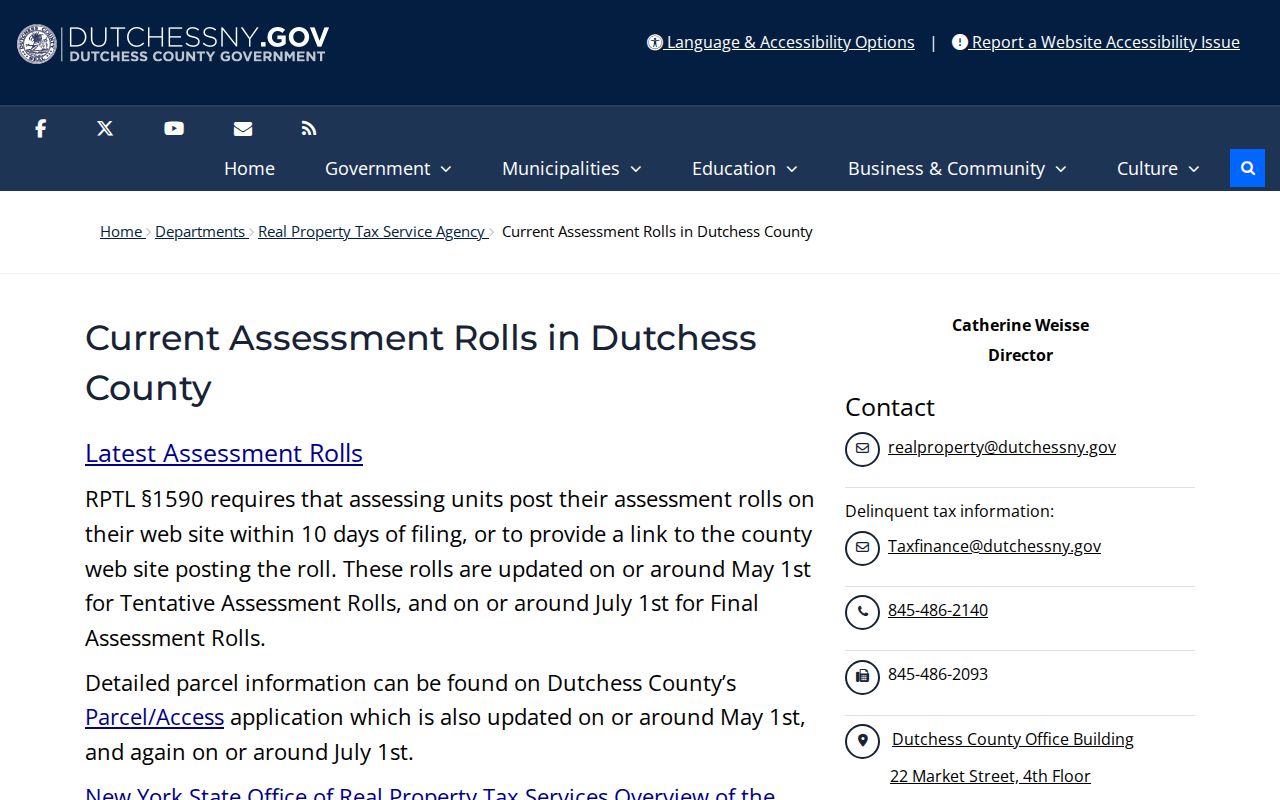
The county page separates tentative and final roll files and explains how to locate a parcel entry.
Dutchess Tax Billing Routes
County, town, city, village, and school levies each use different rolls and billing schedules. Dutchess County publishes links to current and prior rolls. Beacon and Poughkeepsie collect their own city taxes. A tax roll is a dated levy record. For a current balance, the collector's account is the better source. Exemptions generally turn on a March 1 filing point. They should be reviewed with the local assessor. Delinquent county taxes and auction material belong to the Finance route. Read any auction notice as a dated event rather than a standing list of parcels for sale. Parcels drop off once the auction concludes or accounts are settled.
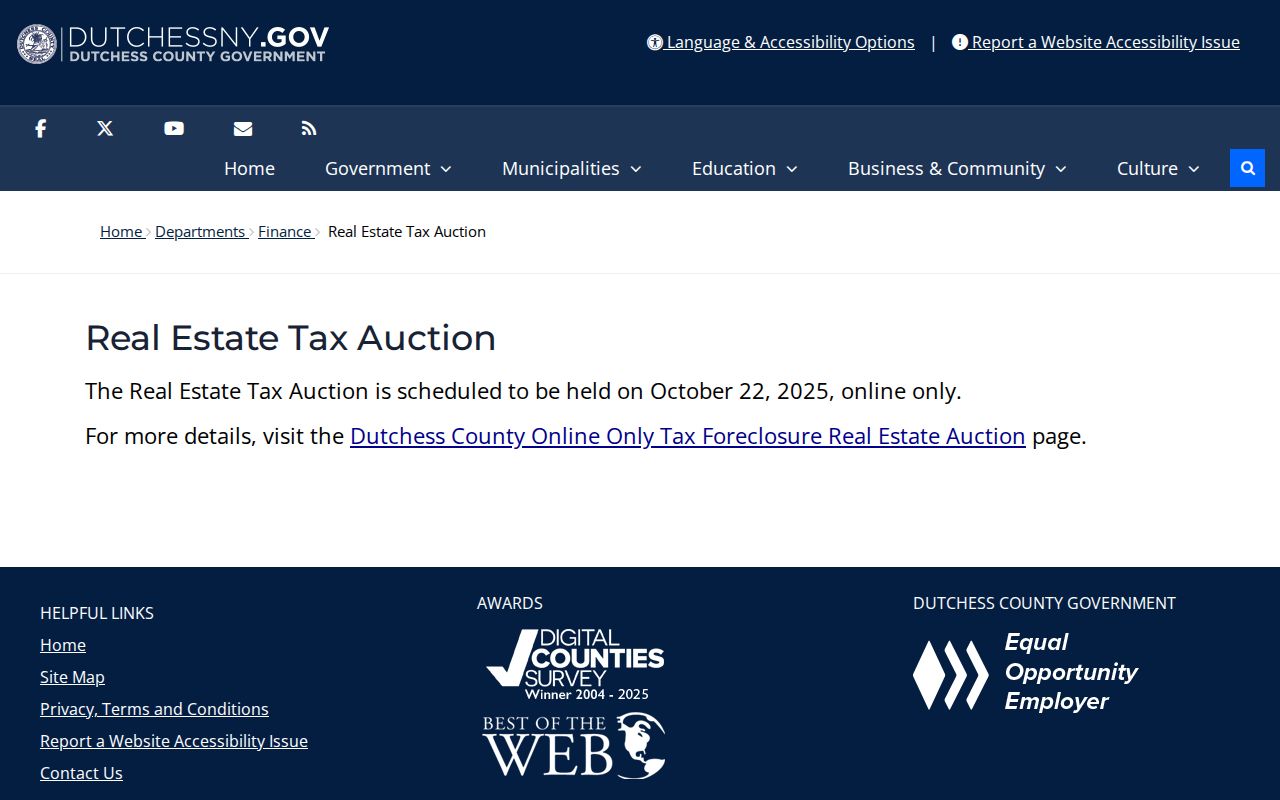
The dated notice directs users to the authorized auction channel and current terms.
Dutchess Exemptions and Grievance
An exemption changes taxable value under its own eligibility rules. It does not touch the deed or the parcel boundary. County forms cover owner-name changes, removals, and exemption materials. The assessor handles the local facts behind them.
If value is the dispute, compare the tentative roll with the parcel card first. Then check the assessor's supporting data before the local grievance deadline. Save the roll year, municipality, grid, assessed value, market-value field, equalization context, and exemption codes. Those details let an assessor respond to the exact record. They work better than a rough address description, so they speed every correction along.
Dutchess Tax Record Stack
One Dutchess County parcel can show up in several different records. An assessment roll, a tax roll, a tax bill, a payment account, a delinquency file, a lien, and an auction notice each serve a distinct purpose. Each one carries its own dates. The assessment roll sets ownership for the taxable-status date. It also lists the parcel grid, classification, assessed value, and exemptions. The tax roll is different. It applies levies for a particular jurisdiction and year. The collector's bill and payment account track amounts due and amounts already paid.
County Finance holds the delinquency and auction files. Beacon and Poughkeepsie collect their own city taxes. Start any Dutchess County property search with the correct municipality. Then check the grid on every record. School, village, town, city, and county entries rarely share one schedule. A lien or auction notice deserves a fresh look at the official source. Payment, redemption, court action, or a newer notice can change its status. The 2025 auction ran online only and was tied to its published date. Treat it as a past event, not a current inventory.
Dutchess 2026 Roll Links
The official 2026 tax-roll page separates county, municipal, village, and school files.
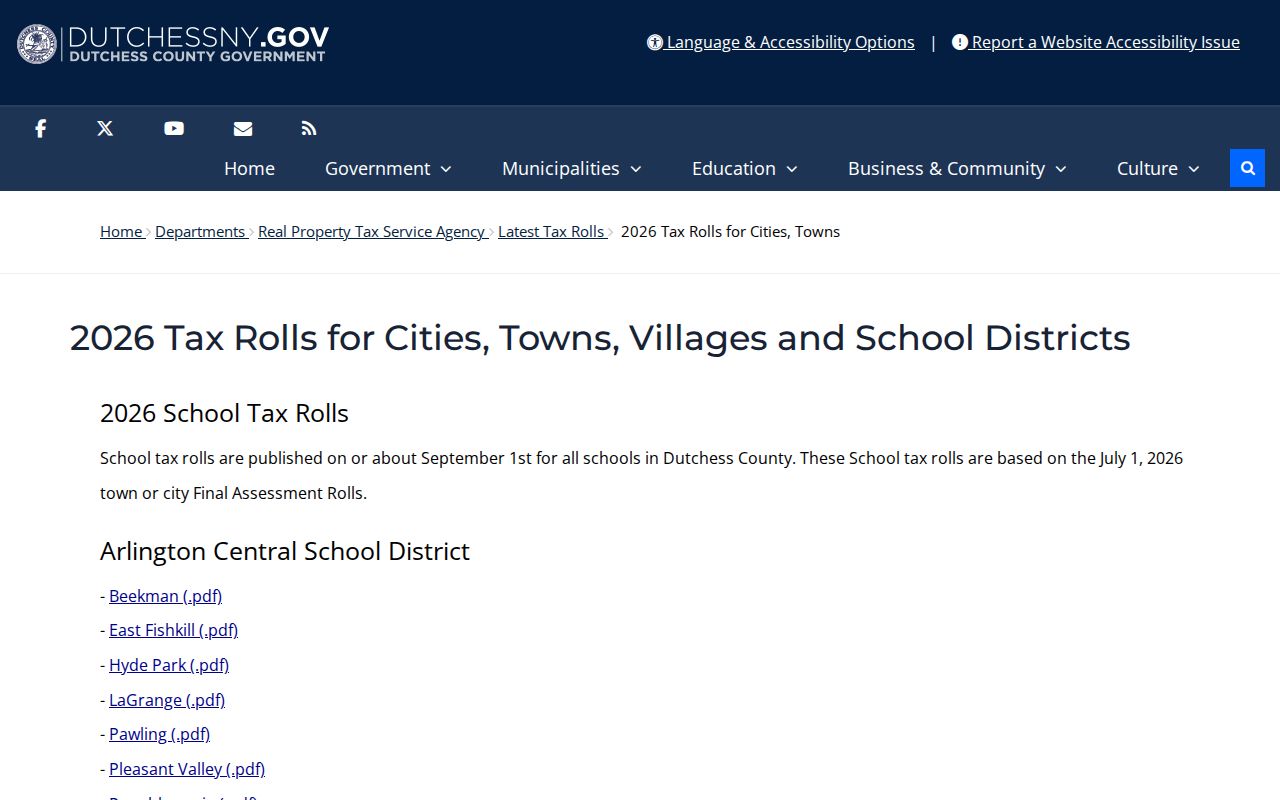
The official roll page lets a reader pick the right jurisdiction for a Dutchess County property records lookup. No single roll should be read as a complete, live bill.
The cited source is the authority for the current record. Before relying on any Dutchess County property records entry, confirm the collector, levy year, parcel grid, and payment date with the office keeping that account.